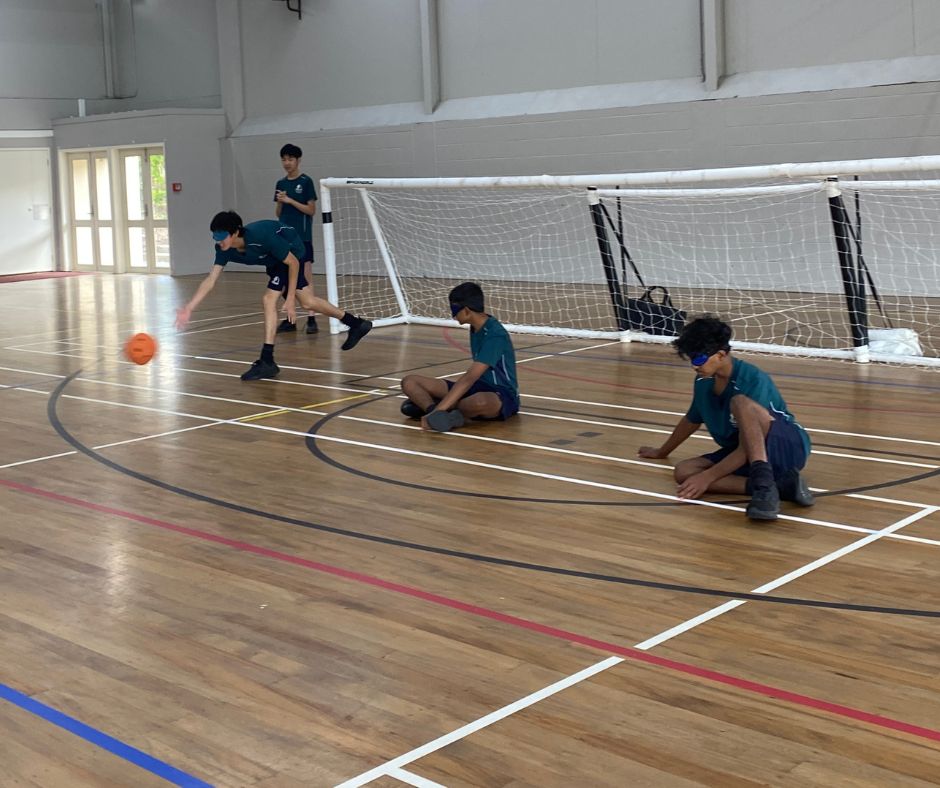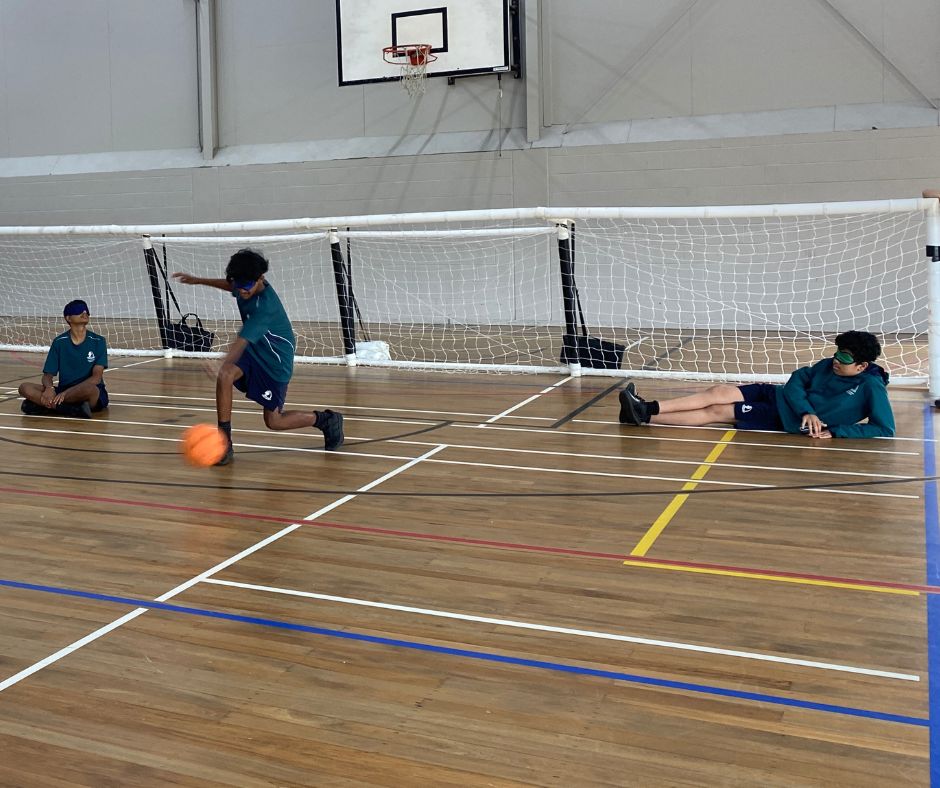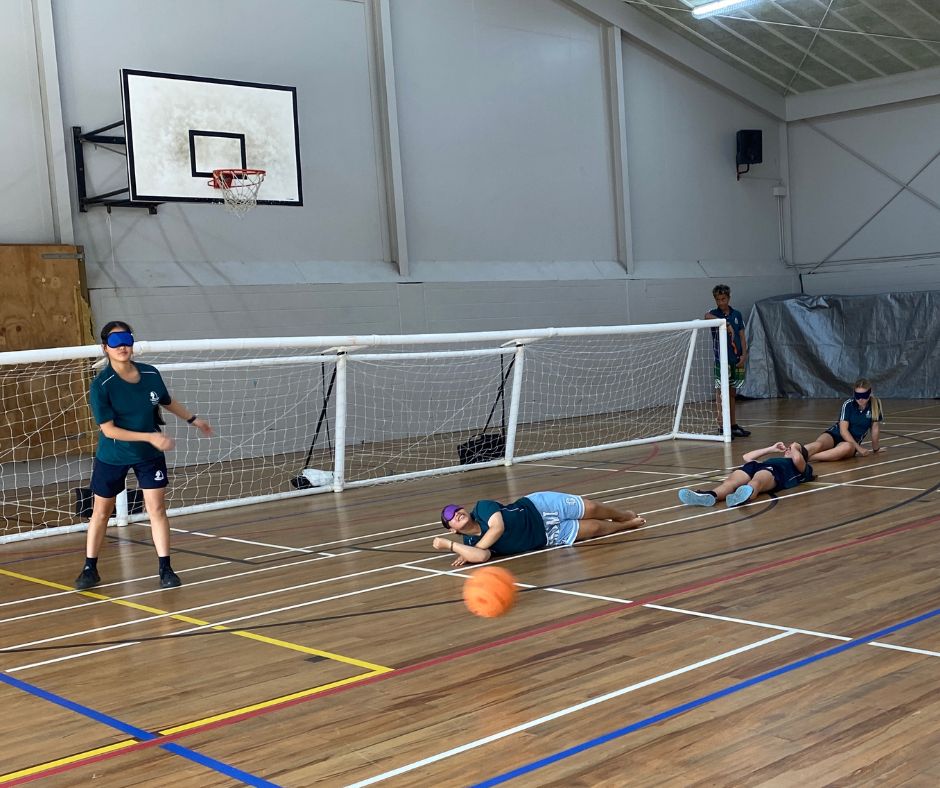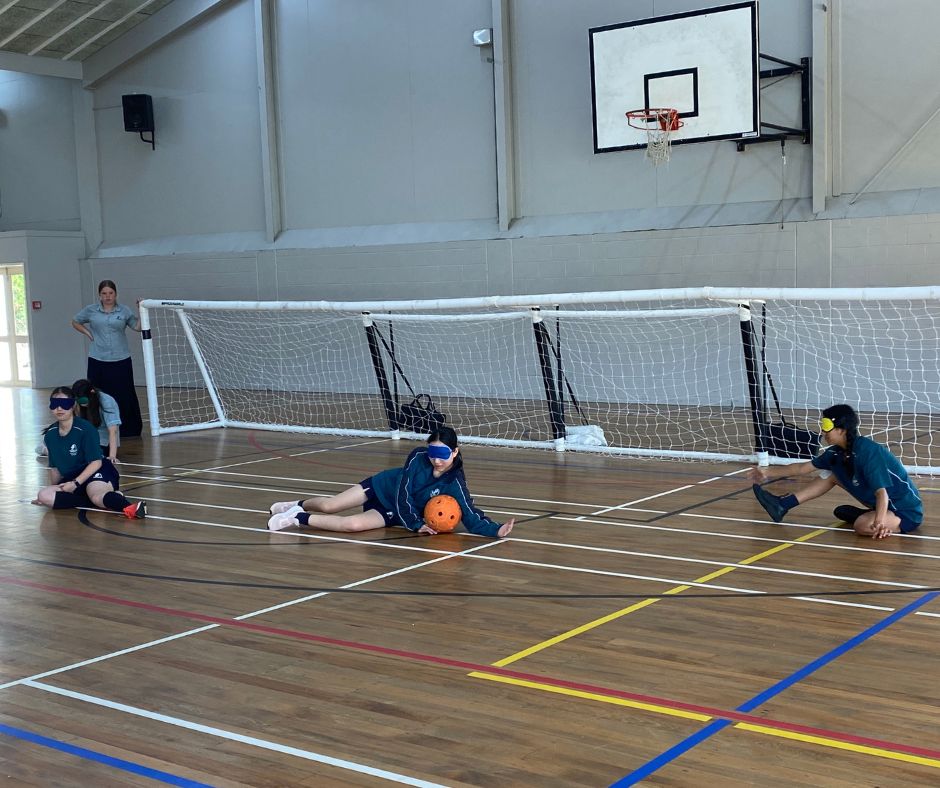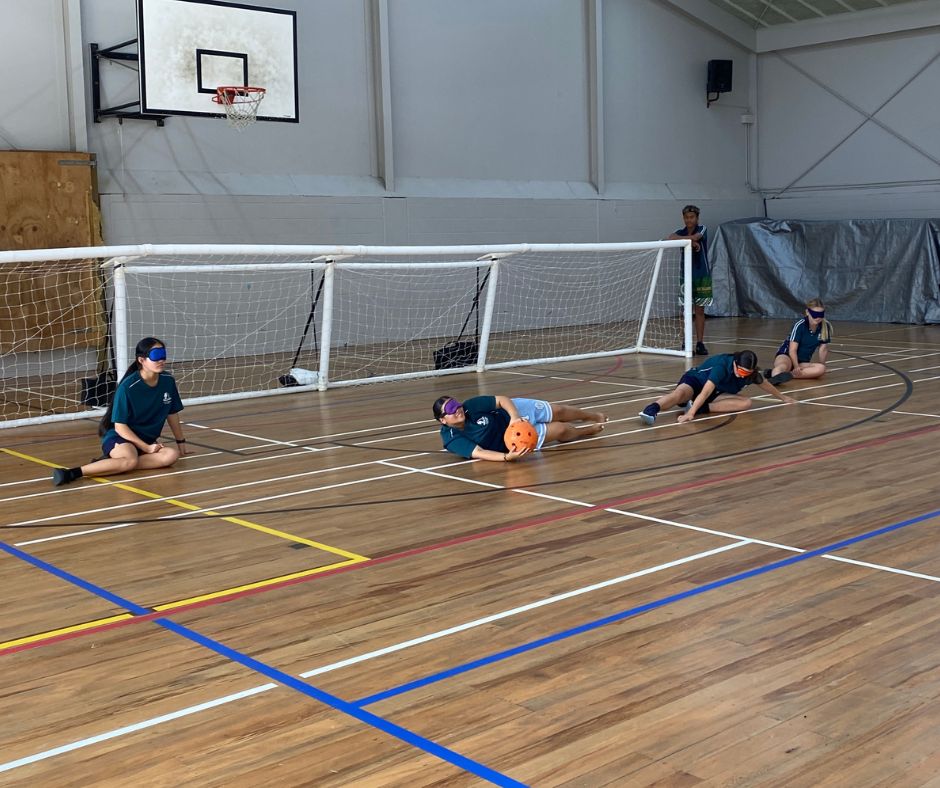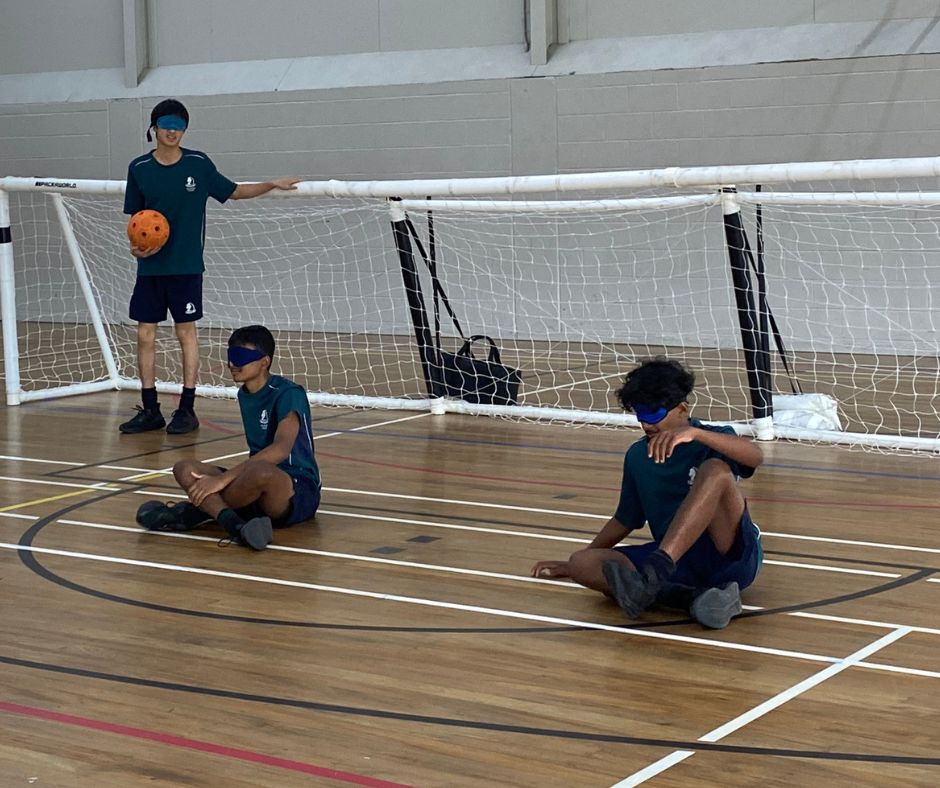
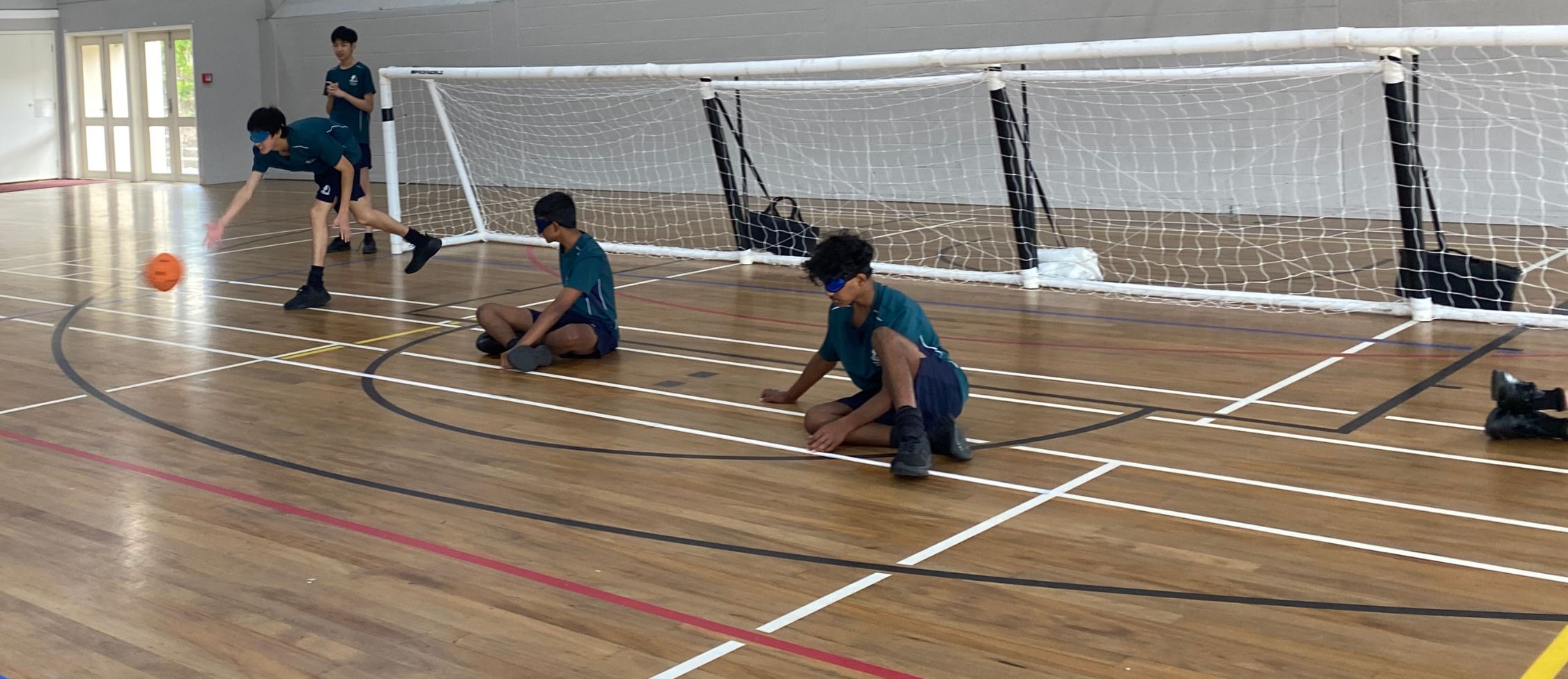
Our Year 10 Health and PE students have been doing a unit on disability and inclusivity in sport, and have been introduced to the exciting world of goalball!
Goalball was created in 1946 as a rehabilitation activity for visually impaired WWII veterans and debuted at the 1976 Paralympic Games in Toronto. It is for athletes with less than 10% of vision remaining or a visual field restricted to no more than 20 degrees. To ensure a level playing field, all participants wear blackout masks while on court, which cannot be touched without the permission of the referee.
The rectangular court features goals the entire width of the sideline on the two short ends. The aim of the game is to roll a ball past the opposition (positioned to protect their goal using the length of their bodies) and score. The ball is fitted with two bells inside to help players hear where the ball is and the direction and speed it is moving. You can discover more about goalball here.
Our Health and PE staff and Year 10 students were introduced to the sport by Social Sciences teacher, Darren Thai, who has a visual impairment.
“I’ve played goalball on and off since I was in intermediate school after being introduced to the sport by my resource teacher from Blind and Low Vision Education Network NZ (BLENNZ). I enjoyed playing with kids my age, and as I got older have even competed in some national tournaments and helped teach the game to other BLENNZ students and trainee Health and PE teachers at university,” says Darren.
“It’s been awesome to bring the game to a new audience. The majority of students have responded positively and respectfully. Lots have challenged themselves to play without taking their eyeshades off, which is not easy when you’ve lived all your life relying on your sight.”
Student Cory Tsao agrees, “It was new. Taking away my main sense, my vision, meant that I had to rely on my other senses and other people more. It was a really good way to experience how people without sight perceive the world.”
Bryce McLeod summed up his experience by saying, “It’s pretty difficult. The most challenging thing was positioning myself to defend the goal when I couldn’t see what was happening or anyone around me. I have a new appreciation for people who can’t see.”
Health and PE teacher, Kirsty Darracott, says that the unit has been very successful and enlightening for many students. “There was huge temptation to lift the eye masks, and many students were quite nervous about losing their vision even temporarily. It was certainly jarring to compete without sight.
“Darren shared with students his negative feelings towards PE at school, which stemmed from the fact that he couldn’t see what his classmates could. Taking away sight really levelled the playing field for everyone; there were no advantages. It also highlighted the very real challenges faced by para-athletes and renewed our appreciation of the need for inclusiveness in sport.”