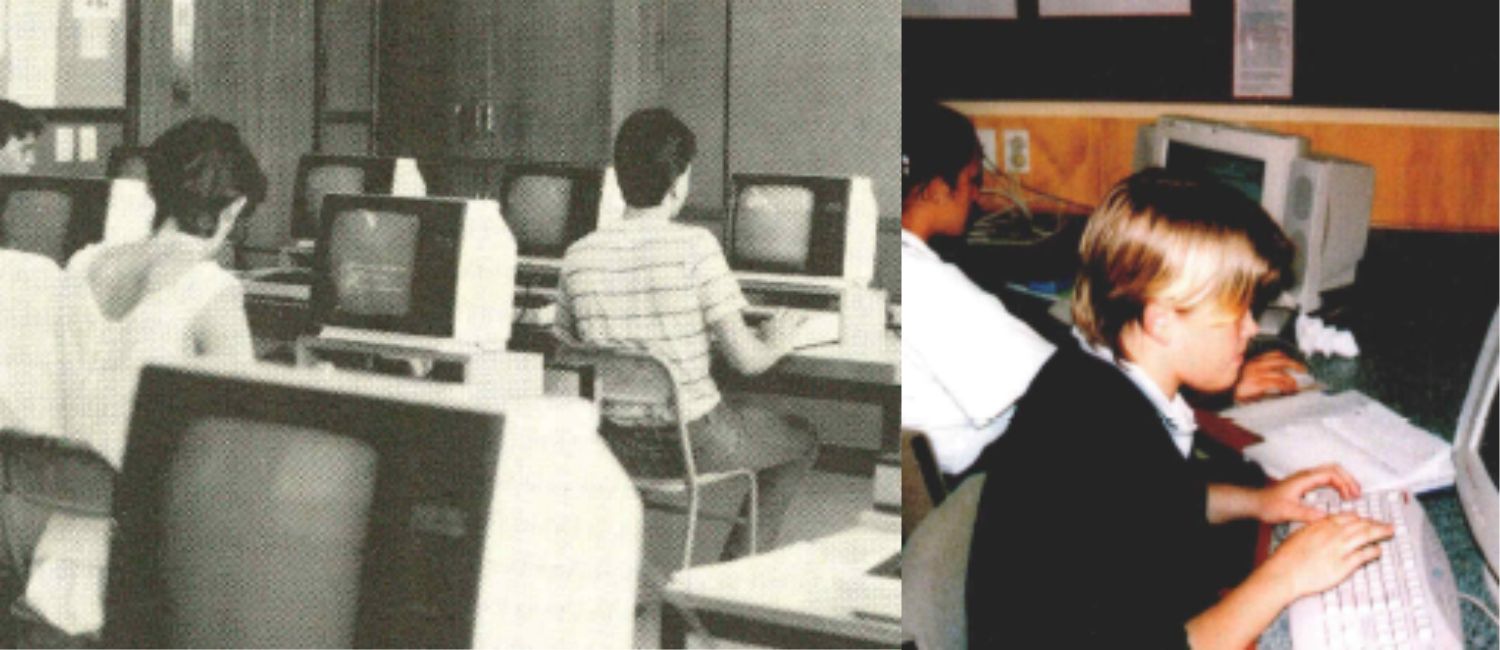
When Barbara Scott first started teaching at Pakūranga College in 1979, her classroom looked very different from today’s.
“We started off with the old chaff-cutter typewriters,” she laughs. “Then came electric typewriters, and after that, these amazing things called word processors.”
Barbara taught shorthand and typing, subjects long gone from the modern curriculum, and vividly remembers the excitement of new technology arriving. “I remember raising money to purchase three word processors for the college, which were $800 each. And that’s what you did in those days because the money wasn’t forthcoming otherwise.”
To raise funds, Barbara and her students got creative. “Drivers’ licences had just moved to paper slips, so we sold protective covers for them. Milk was moving from glass bottles to cartons, so we sold milk pourers to go in the cartons,” she recalls.
In the 1980s, computers began arriving slowly. “At that stage, the Maths Department had a few computers, but nobody else touched them. They sold compost to raise the money!”
By the 1990s, electric typewriters and word processors had been replaced with computers. “Typing classes became Computing and Information Technology classes, and that was basically learning to use Microsoft products,” Barbara explains.
When Computing and IT classes were eventually phased out around 2010, Barbara transitioned to the Social Sciences Faculty. “I hadn’t taught Juniors for about 10 years, but I loved it. You can branch off into areas of interest; it reminded me how great it is to teach Juniors. The collegiality was fantastic.”
Looking back, Barbara sees her time as a reflection of how much education has evolved. From manual typewriters to cloud-based learning, she’s witnessed it all and embraced every change with enthusiasm.
Header image: PCs in dedicated computer rooms of yesteryear.