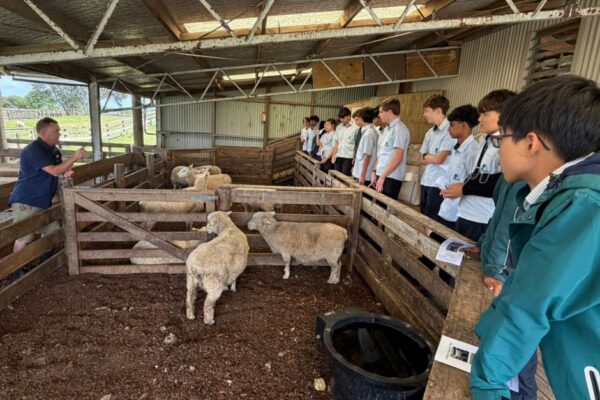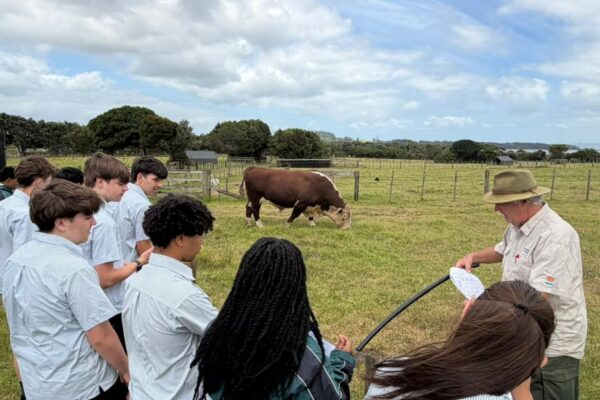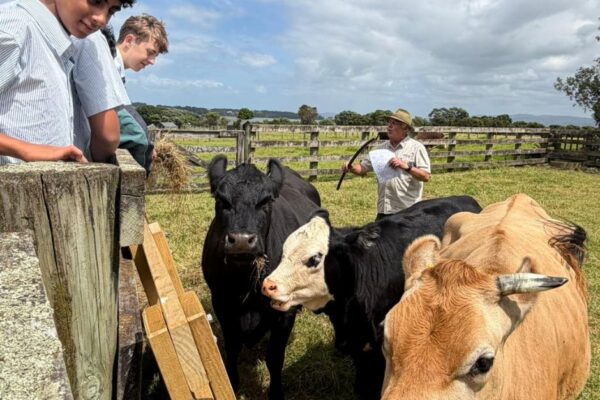
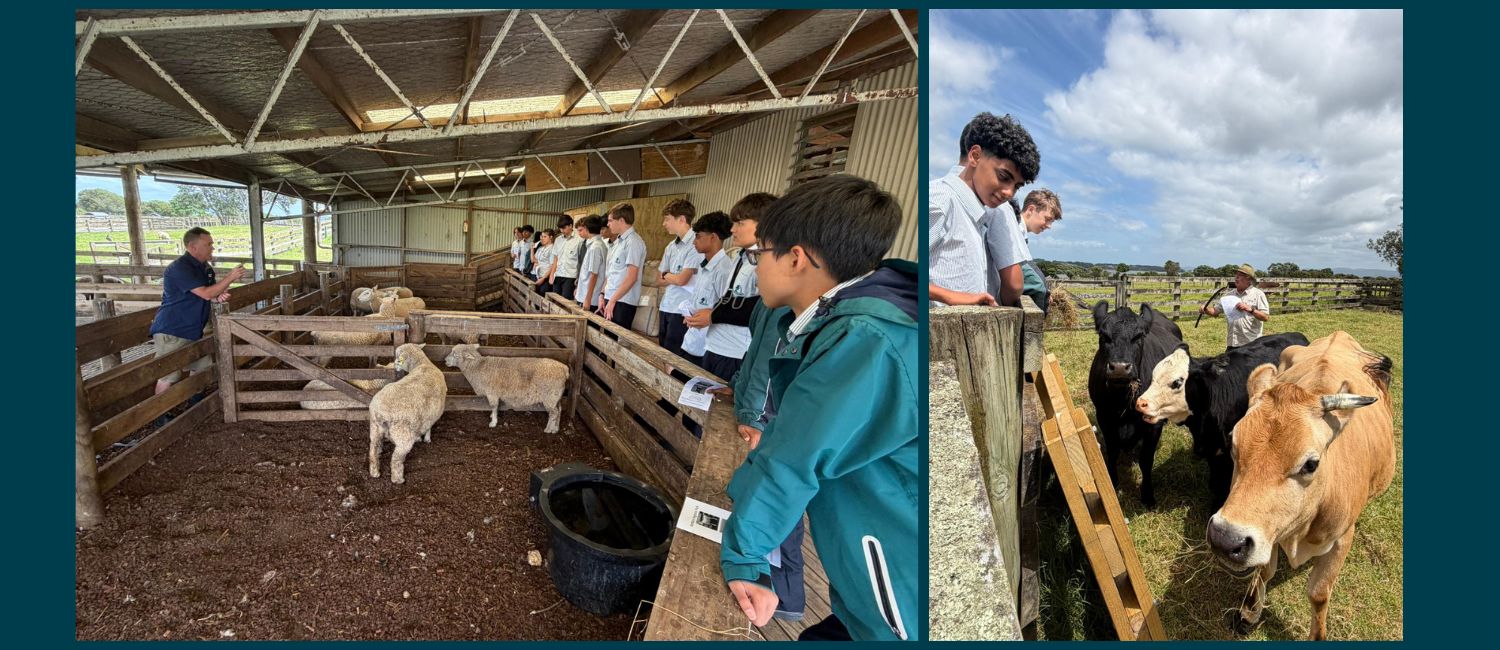
Year 11 Science students recently took their classroom learning into the field with our annual trip to Ambury Regional Park, where they explored real-life applications of genetics and selective breeding in New Zealand farming. The visit provided an authentic context for understanding how genetics shape the cattle and sheep farming practices in New Zealand.
In class, students have been learning about inherited characteristics, genetic variation, and how traits are passed from parents to offspring. At Ambury, they were able to observe these concepts in action. By examining different breeds of cattle and sheep, students identified observable traits such as coat colour, body size, wool type, and muscle development. Park educators went on to explain how farmers use selective breeding to increase the frequency of desirable traits within a population. For example, selectively breeding dairy cattle for high milk yield and milk quality.
Further visits scheduled for Week 7 will focus on animal health and parasites. Students will investigate how parasites and infectious agents can impact livestock health, productivity, and farm management decisions.
The weather was lovely for the trips, and it was pleasing to see our students engaging positively during their time at Ambury Park. Experiences like these can strengthen their understanding of how scientific knowledge can be applied beyond the classroom.
Alison Wilson – Science Teacher